
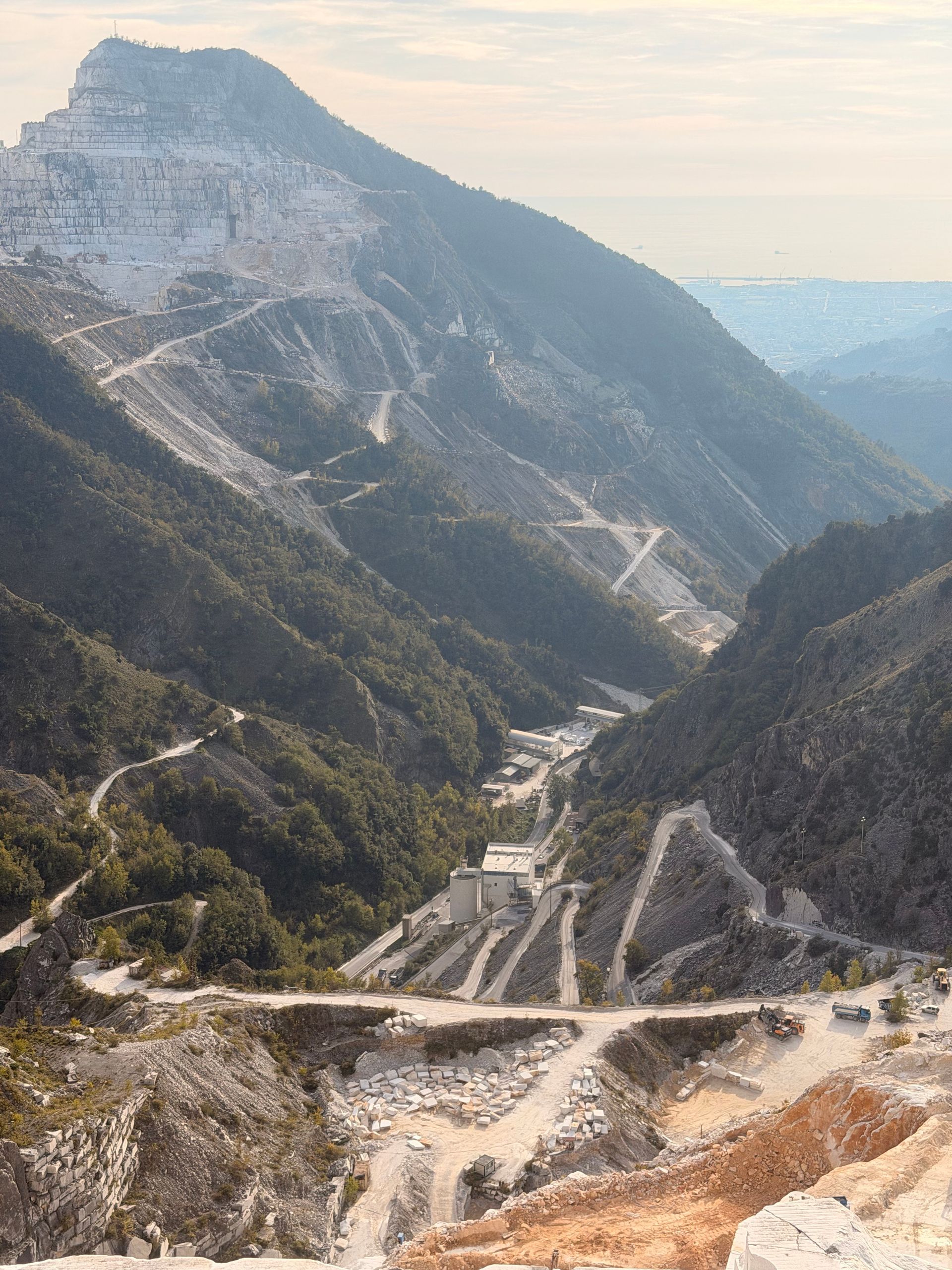
Quarry inventory: what is still in the yard, in cubic metres.
Quarry inventory for marble is not a month-end count. Sales asks whether a 280 × 180 × 160 first-quality block is still there. A foreign buyer asks how long their mark has waited. Management asks whether m³ is building or shrinking. If that answer waits for a spreadsheet, the yard has already moved.
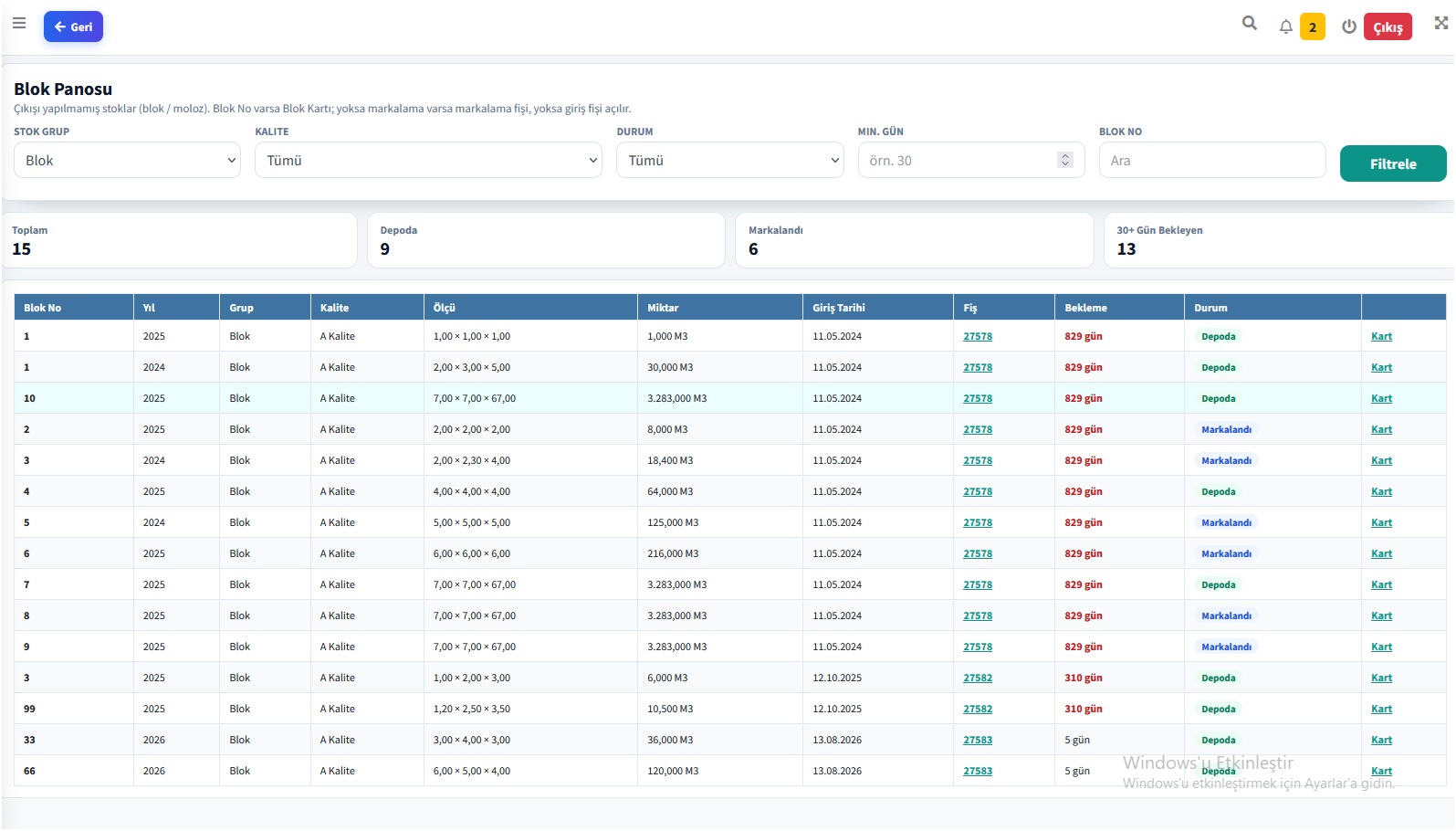
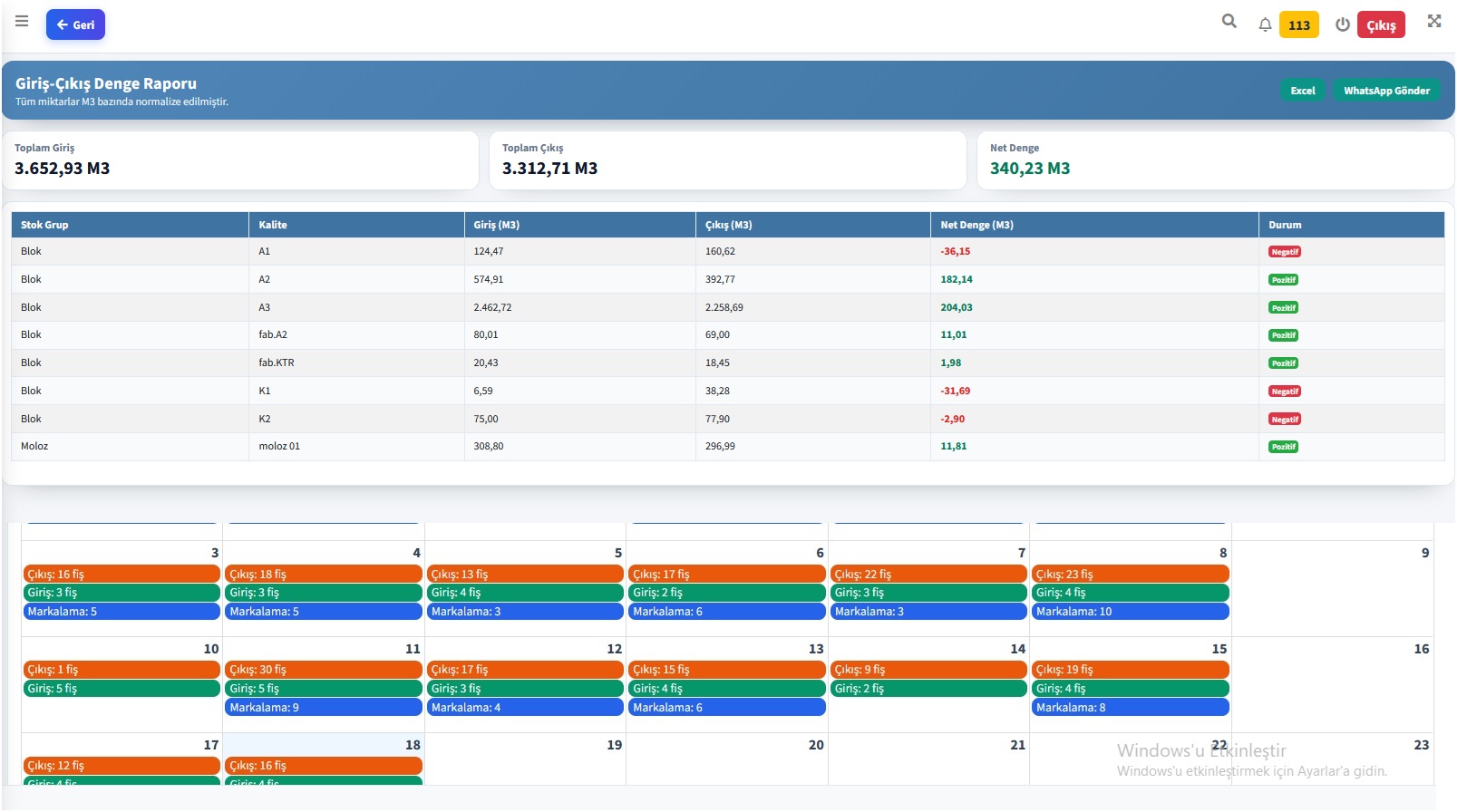
EgeOcak quarry inventory is the block board: waiting stock as cards, filtered by quality, group, status, idle days and block number. Stock query finds a size and grade. The in-out balance report shows which grades added or lost cubic metres. Inventory only stays true if block tracking already tied intake, mark and dispatch to one record — that is what marble quarry software is for.
What a live quarry inventory answers
- Which blocks are still in the yard, by quality and group
- Which marks have not shipped (idle days)
- Block versus rubble, without mixing the two counts
- Net m³: intake minus dispatch, by grade
- What a given account has already received versus remaining
EgeOcak is not a 3D yard map with GPS pins on every stone. The quarry map is field memory on a photograph. Inventory lives on the board and the balance report — the screens the office actually uses when a buyer writes.
See the block board in a demoInventory the export office can defend
When a factory abroad asks for remaining volume, the portal shows delivered versus remaining on the order. When the pit asks whether stock is growing, the in-out balance is the answer — not a second Excel. Shipping-age reports show how many days a block sat between production and the truck.
Quality scores roll into production and account summaries, so inventory talk is not only a grade name. See the report list and the customer portal.
Related
Inventory is the stock view. Block tracking is the identity of each stone. Both sit inside EgeOcak marble quarry software.