

Marble block tracking: one stone, one record, one buyer.
Block tracking in a marble quarry is not barcode logistics. Each block is unique: veining, size, a quality note and a photograph. A trader marks it on a Tuesday and loads it on a Friday. If the office copies a spreadsheet row, that stone is sold twice. If the mark lives in a chat, the overseas factory never sees it.
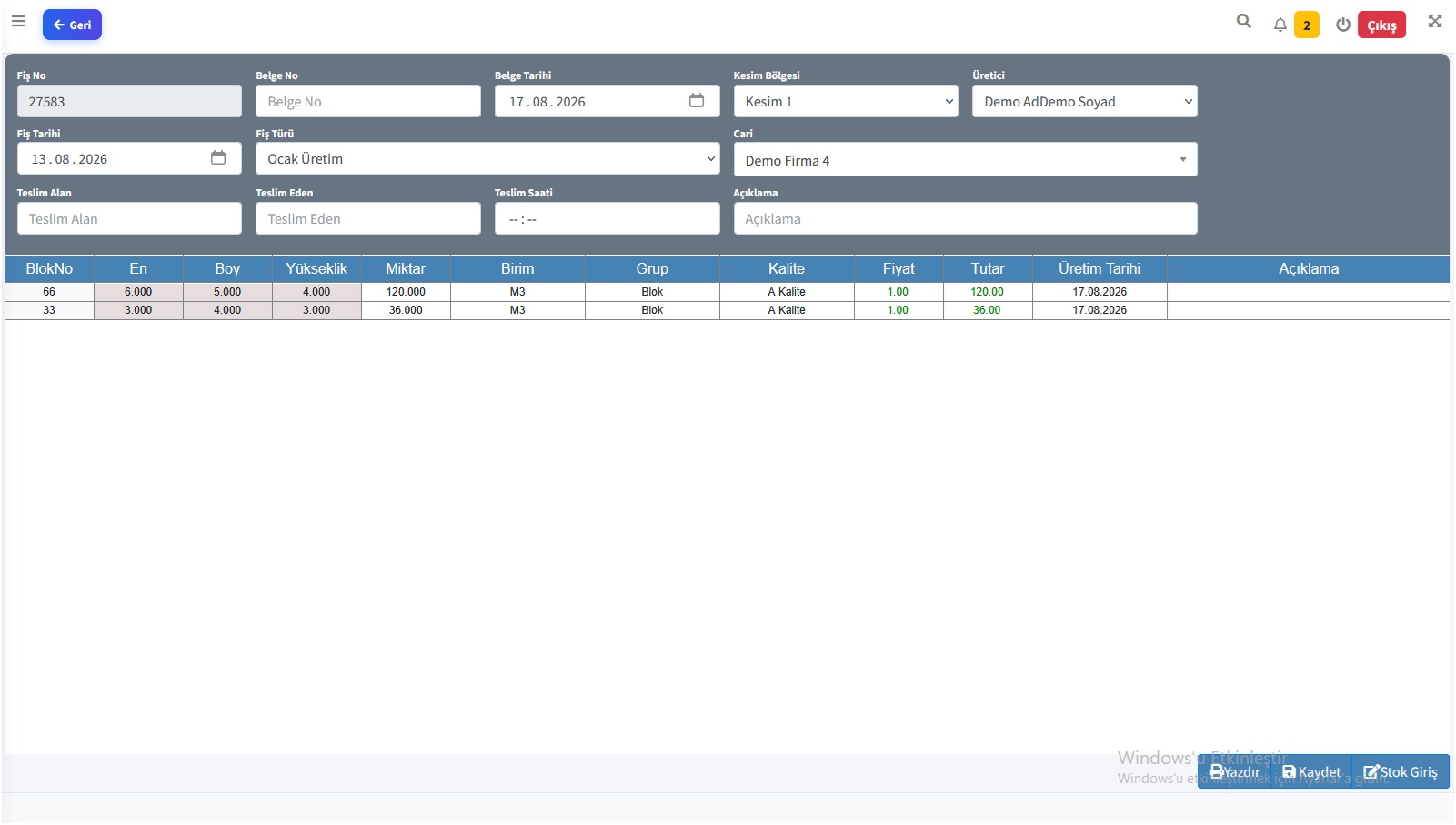
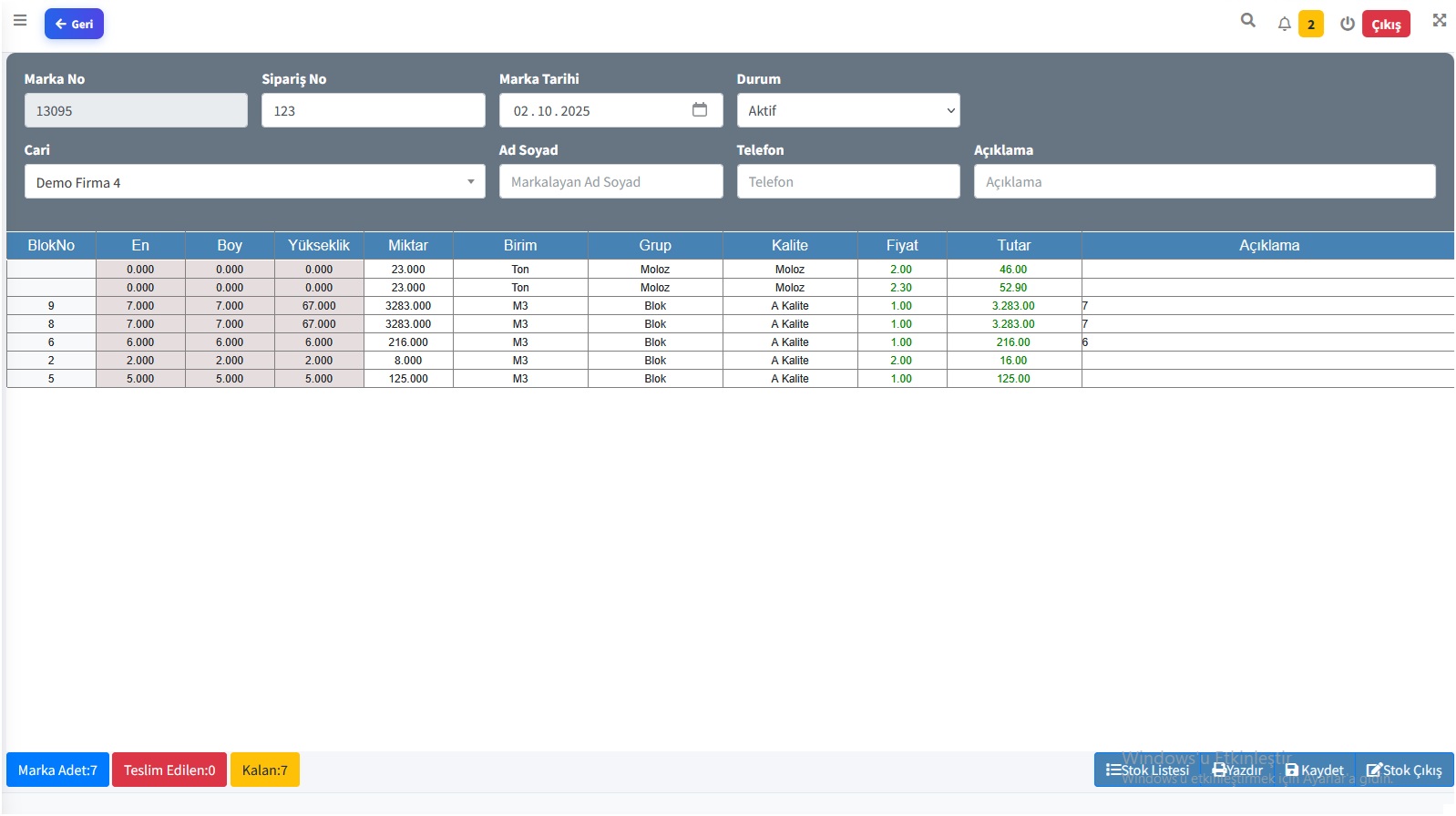
EgeOcak block tracking starts on the intake slip. The yard records block number, year, quality, group, dimensions, quantity and photos. When a buyer reserves the stone, a marking slip holds it. When the truck leaves, a dispatch slip closes the stock. The same identity travels through all three. That is the core of marble quarry software — not a scan gun bolted onto a generic warehouse system.
What block tracking must not lose
- Identity: number, year, quality, bench and cut
- Geometry: length, width, height and m³ on the same line as the photo
- Sequence: intake → mark → dispatch, without a second file
- Open orders on the top bar so a reserved block is not forgotten
- Quality score on the grade, used in marking and account summaries
- A line the foreign buyer can see on the portal
EgeOcak does not measure the block with LiDAR. The yard still takes dimensions. The software’s job is to keep that measurement, the photo and the mark from drifting apart.
See block tracking in a demo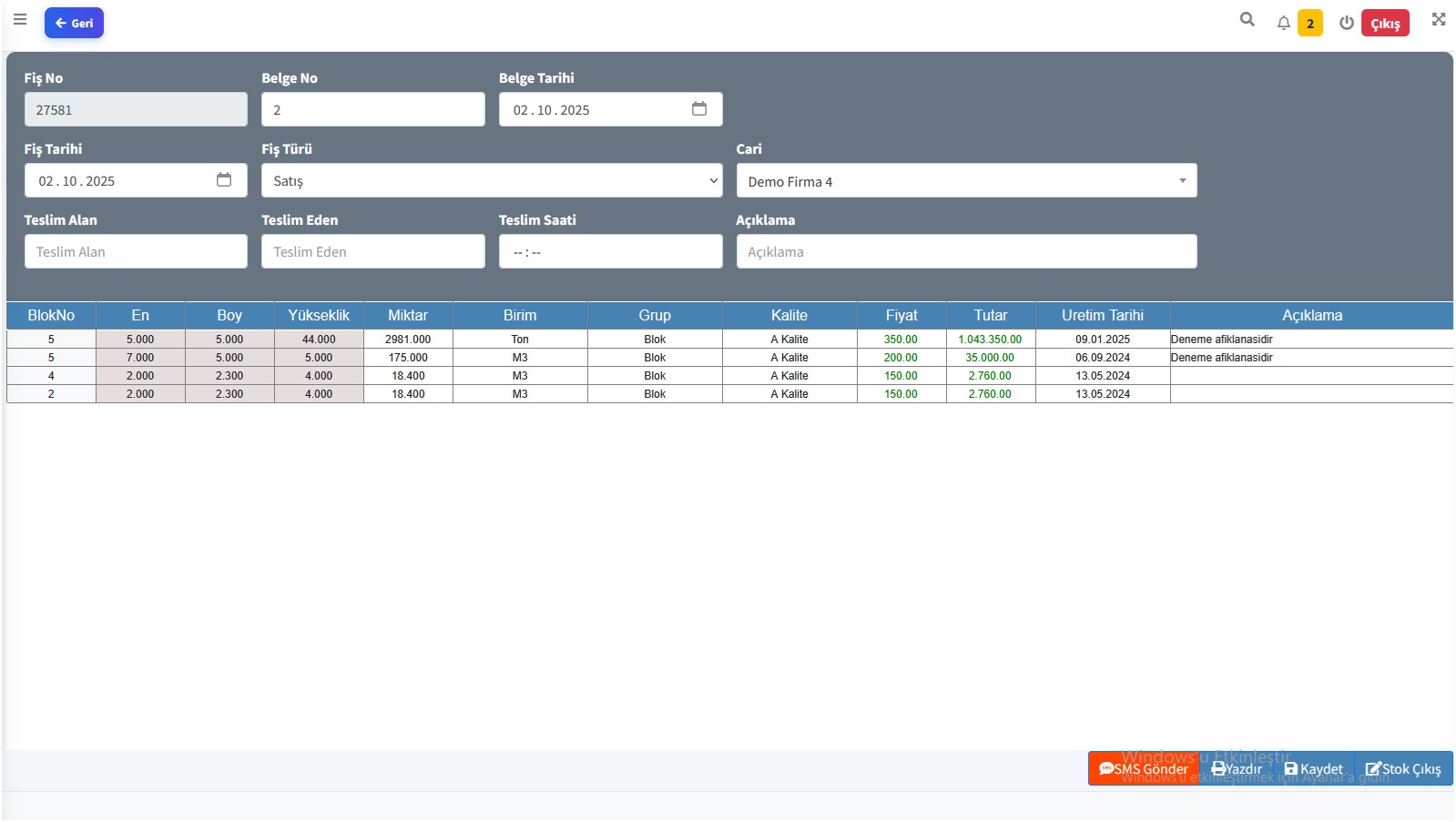
Block tracking for export buyers
Foreign factories do not walk the Mugla yard every week. They mark on a visit, then wait. Block tracking only works if they can see remaining lines without calling. The portal lists mark number, delivered and remaining, with a PDF of the detail. Yard staff keep marking in EgeOcak; the buyer watches the same record.
Related
Once the block has an identity, quarry inventory is the board of what is still in the yard. For the category overview, start at marble quarry software.